
We pursue transformational science
AT-1965 inhibits CMTR2 in cancer cells + recruits B cell against the tumor
CMTR2 labels the RNA as ‘self’. Inhibiting CMTR2 converts the cancer cell RNA into viral RNA-like, triggering a novel evolutionary conserved antiviral mechanism driven by IFIT proteins. This also ‘lights-up’ the tumor for B lymphocytes to mount an immune response against the tumor.
B cells play a pivotal role in both innate and adaptive immunity. Naive B cells secrete IgMs, which bind ‘viral’ antigens and activate the innate immune cells like NK cells, macrophages; B cells act as antigen presenting cells and activate CD8T cells; and release cytokines that stimulate the immune system. Activated B cells mature into long term memory or plasma cells that release IgGs and provide long-term immune memory . Through these multiple mechanisms, B cells provide a broader immune coverage than activating either T cells or NK cells alone.
Read more about AT-1965 mechanism of action in this recent Nature News and Views editorial here
Presentations and publications
Nature Nanotechnology
June 2026
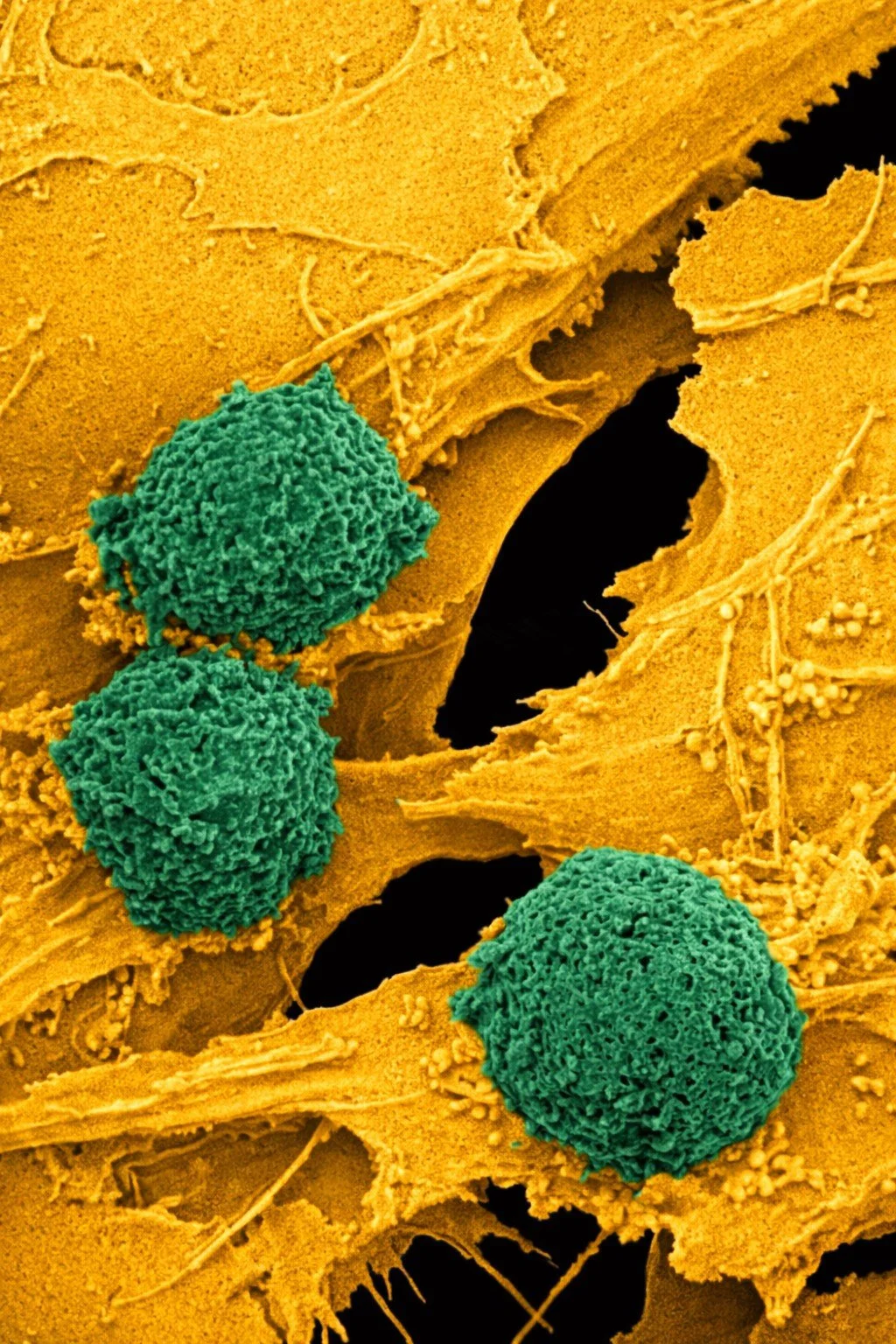
B cells (green) on cancer cells (gold) seen using electron microscope
A quantum mechanics-all atomistic simulation enables high-loading lipid nanoparticles
This patented platform allowed us to engineer AT-1965 liposomal formulation with 3X drug loading vs standard formulations, creating a significant barrier to entry.
Read more about the patented platform here
Read more on CMTR2 (from independent groups)
Nukaga, S., Shiraishi, K., Hamabe, K. et al. Mutation of CMTR2 in Lung Adenocarcinoma Alters RNA Alternative Splicing and Reveals Therapeutic Vulnerabilities. Nat Commun. 16, 9754 (2025).
Smietanski, M., Werner, M., Purta, E. et al.Structural analysis of human 2′-O-ribose methyltransferases involved in mRNA cap structure formation. Nat Commun 5, 3004 (2014).
Read more on how B cells improve clinical outcomes in solid tumors (from independent groups)
Helmink, B.A., Reddy, S.M., Gao, J. et al. B cells and tertiary lymphoid structures promote immunotherapy response. Nature 577, 549–555 (2020).
Petitprez, F., de Reyniès, A.,. et al. B cells are associated with survival and immunotherapy response in sarcoma. Nature 577, 556–560 (2020).
Sharonov, G.V., Serebrovskaya, E.O., Yuzhakova, D.V. et al. B cells, plasma cells and antibody repertoires in the tumour microenvironment. Nature Rev Immunol 20, 294–307 (2020).
Wieland, A., Patel, M.R., Cardenas, M.A. et al. Defining HPV-specific B cell responses in patients with head and neck cancer. Nature 597, 274–278 (2021).
Laumont, C.M., Banville, A.C., Gilardi, M. et al. Tumour-infiltrating B cells: immunological mechanisms, clinical impact and therapeutic opportunities. Nat Rev Cancer 22, 414–430 (2022).
On Chemistry and Simulations
Kulkarni, A., Chandrasekar, V., Natarajan, S.K. et al.A designer self-assembled supramolecule amplifies macrophage immune responses against aggressive cancer. Nature Biomed Eng 2, 589–599 (2018).
Gupta, N., Ansari, A., Dhoke, G.V. et al.Computationally designed antibody–drug conjugates self-assembled via affinity ligands. Nature Biomed Eng 3, 917–929 (2019).
On AT-1965 synergizing with PD1 inhibitors
Roy M, et al. AT1965, a novel B cell-activating immunotherapy, exerts potent anticancer activity. 2018 Cancer Res (2018) 78 (13_Supplement): 4712.
AT-1965 preclinical and mechanistic studies
Britto, L.S., Singh, A. Activating antiviral defenses warms up cold tumours. Nature Nanotechnol. (2026).
Aggarwal, H., Gupta, N., Sengupta, A. et al.Activating a B cell immune response regresses immunologically cold tumours. Nature Nanotechnol. (2026).